

Written by Antonina Schubert
There are some movies that stay with you long after the credits roll. Union County is one of those films.
I had the opportunity to attend an early screening of Union County at Gateway Film Center in Columbus, OH on August 5, followed by an exclusive Q&A with writer and director Adam Meeks, actor Will Poulter, and actress and recovery director Annette Deao. As the first stop on the film's Ohio early screening and Q&A run, the evening offered a special opportunity to not only experience the film, but to hear directly from the people who helped bring its story to life.
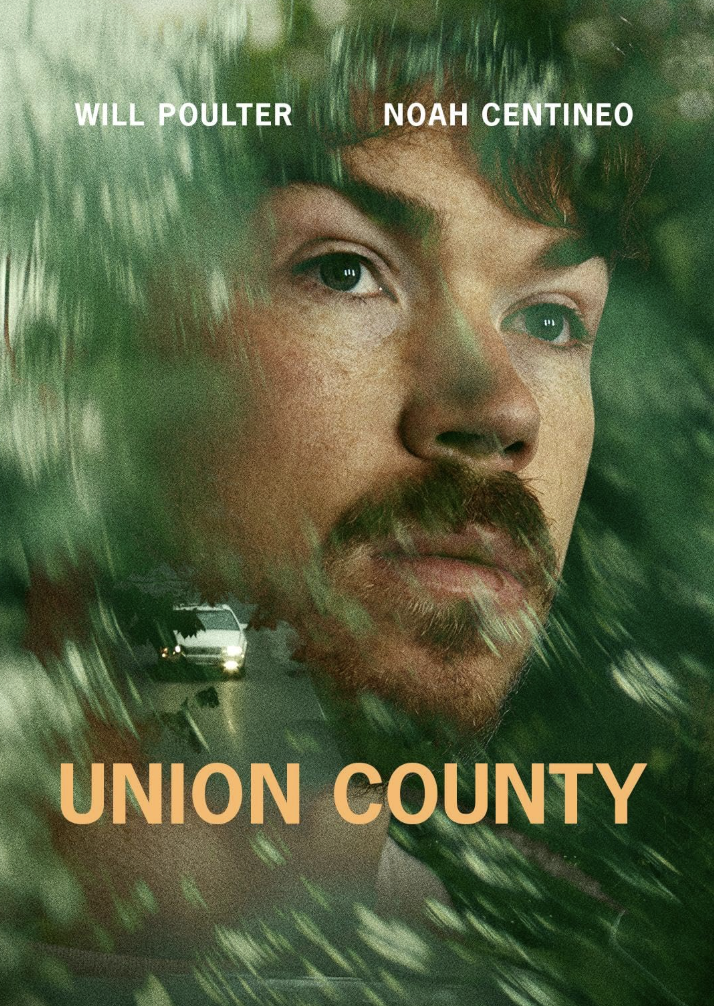
Opening in theaters August 14, Union County follows foster brothers Cody Parsons (Will Poulter) and Jack Parsons (Noah Centineo) as they navigate addiction and a county-mandated drug court program in rural Ohio. Written and directed by Ohio native Adam Meeks, the film expands upon his 2020 short of the same name and was created in collaboration with participants from the Adult Recovery Court in Bellefontaine, Ohio.
That collaboration is one of the things that makes Union County feel so different from many films about addiction.
Rather than relying solely on actors to tell the story, Meeks brings real people and their experiences from the recovery court program into the film. The result is a unique blend of fictional storytelling and documentary-style realism. What could have easily felt like two separate stories instead comes together naturally, creating something that feels deeply personal and authentic.
The film does not shy away from the difficult realities of addiction. We see the exhaustion, the setbacks, the temptation, the relapses, and the emotional toll that comes with trying to rebuild your life. Recovery is not presented as a straight line, because it rarely is. There are good days and bad days, moments of progress, and moments when everything feels like it is falling apart.
But what makes Union County so impactful is that it does not allow addiction to be the end of the story.
It gives us hope.
So often, stories about addiction focus almost entirely on the destruction it causes. Union County acknowledges that destruction, but it also shows what can happen when someone is given the resources, support, community, and opportunity to pursue recovery.
That message came through even stronger during the Q&A.
Meeks spoke about the importance of building relationships within the community and making sure the real people involved in the recovery court program had the opportunity to share and celebrate their stories. That care is evident throughout the film. The people on screen never feel like props in someone else's story. There is a genuine sense of respect for the experiences being shared.
Deao, who appears in the film while also bringing her real-life experience as a recovery director in Ohio, was another standout. There is a warmth and compassion in her performance that feels impossible to manufacture. You can see how much she cares about the people going through the program and how badly she wants to see them succeed. Knowing that her role is informed by her actual work in recovery adds another layer to those scenes.
Then there is Will Poulter.
Poulter delivers an incredibly restrained and vulnerable performance as Cody Parsons. We see Cody's struggle both physically and mentally, and Poulter does an impressive job communicating that without needing to spell everything out for the audience. His performance captures the exhaustion of someone who is constantly fighting a battle that other people may not always understand.
There is one particular scene involving Cody sitting in a car that I cannot stop thinking about.
Without giving anything away, the scene captures Cody in a moment of quiet, overwhelming struggle as he tries to process an intense and deeply painful event in his life. The way it is performed and framed is incredibly effective in conveying grief, not only through dialogue and exposition, but through stillness, expression, and the weight of what is left unsaid.
It is a portrayal of pain that feels both intimate and unflinching, and it brought me to tears because of how accurately it reflected emotions I have struggled to put into words for other people. As someone who has personally struggled with addiction and has also lost a sibling who battled addiction, there were moments throughout Union County that felt painfully familiar.
But that scene in particular hit differently.
For the first time, I felt like I was watching someone portray the emotions of grief in a way I had never been able to fully explain in words about my own experience with grief and addiction.
Poulter's performance in that moment, alongside Deao's, is raw, vulnerable, and incredibly human. It is the kind of scene that stays with you because it does not feel manufactured for the sake of a dramatic movie moment. It feels lived in.
Noah Centineo also delivers a powerful performance as Jack, showing a different perspective while struggling with addiction and the ways it can consume someone's life. While Cody and Jack are walking through many of the same struggles, we see them gradually begin to take very different paths. Centineo does an especially strong job of portraying what happens when addiction takes hold and how difficult it can be to see a way out.
Together, Poulter and Centineo create a compelling dynamic as brothers. You see two people who, in many ways, are walking the same line, yet begin straying in different directions along the way. Their relationship adds another emotional layer to the story, making the struggles of addiction feel even more personal because of what is at stake between them.
And that is ultimately what Union County does so well.
There is so much stigma surrounding addiction, and it can be easy to forget that behind every statistic is a person, a family, a community, and a story. Addiction can consume people. Fighting it can be exhausting. Recovery requires choosing to keep fighting, sometimes over and over again.
Union County understands that.
The film also does an excellent job showing how much community and connection can matter. In a rural Ohio community where resources are limited, the people working within the recovery court system are doing what they can with what they have. The film recognizes that recovery is not something someone is necessarily expected to navigate alone. Having people who believe in you, resources to help you, and a community willing to support you can make an enormous difference.
And while Union County is deeply rooted in rural Ohio, its message extends far beyond the state.
Addiction does not discriminate based on where someone lives. It can happen anywhere, to anyone, and the need for compassion, resources, and support exists everywhere.
That was one of my biggest takeaways from both the film and the conversation that followed it. Hearing the audience ask thoughtful questions about addiction, recovery, the filmmaking process, and the real people represented on screen made it clear that Union County had already created a sense of connection in the room.
After the Q&A, I also had the opportunity to speak briefly with Meeks and Poulter. Even in those conversations, it was clear how much this film and the story it tells meant to them. That passion comes through on screen.
Union County may not be for everyone. With its heavier topics and themes, some viewers may find the subject matter difficult to sit with. Its slower, quieter approach may not work for every viewer, either. There are moments where the pacing feels intentionally restrained. But for me, that restraint ultimately works with the story being told. Recovery is not always dramatic. Sometimes it is simply getting up, showing up, making the next right decision, and doing it again the next day.
That is what makes the hope in this film feel earned.
Union County is a beautiful and painfully honest representation of addiction and recovery, but more importantly, it is a reminder that someone's worst moments do not have to define their entire story.
There can be setbacks.
There can be relapses.
There can be grief.
There can be fear.
And there can still be hope.
While this film connected with me on a deeply personal level, I think its greatest strength is that its message reaches far beyond one person's experience. Union County is ultimately a story about community, connection, second chances, and what can happen when people are given the support and opportunity to keep moving forward.
It is a film that asks us to look past the stigma surrounding addiction and remember the people behind it. It reminds us that recovery is possible, that progress can look different for everyone, and that sometimes having someone believe in you can make all the difference.
Rating: 8/10
Upcoming Union County Q&As:
If you want to experience the film and hear directly from some of the people behind it, there are several upcoming Q&A screenings.
In New York, the IFC Center will host Q&As with director Adam Meeks, Will Poulter, and Annette Deao on August 14, 15, and 16. The August 13 sneak preview will also include Noah Centineo alongside Meeks, Poulter, and Deao. Some of these screenings are already sold out, so check the IFC Center's event page for current availability.
Noah Centineo will also participate in exclusive Q&A screenings in Los Angeles at Landmarks Theaters on August 15 and 16.
Later this month, director Adam Meeks and producer Sean Weiner will participate in a Q&A in New York on August 24.
The film's theatrical availability will vary by market, so check Fandango to see if Union County is playing at a theater near you.
If You or Someone You Know Is Struggling:
If Union County brings up difficult feelings or reflects something you or someone you love is experiencing, you do not have to navigate it alone.
SAMHSA's National Helpline offers free, confidential, 24/7 treatment referral and information for people and families facing mental health and substance use disorders.
SAMHSA National Helpline: 1-800-662-HELP (4357)
If you or someone you know is experiencing a mental health crisis or emotional distress, you can call or text 988 for the 988 Suicide & Crisis Lifeline.


Discussion