

For me, editing is not a chore. For others, it is something they dread. I am not entirely sure why, but it may have something to do with my background in photography.
Editing is something I genuinely enjoy, whether I am up against an immediate deadline or have a bit of breathing room. In sports, deadlines can hit within an hour of an event’s conclusion. I can have everything ready to go, but I still need the final score before I can file my images.
Editors I work with outside of Voltage Live Media expect clean, solid photos—no unnecessary bells and whistles. More importantly, they do not want images altered beyond standard adjustments. Crossing that line is a serious breach of editorial ethics.
My most recent editing session came after the Air Supply show last night (as of this writing). I shot 1,064 images between two camera bodies: 957 with my 100–300mm f/2.8 and 89 with my 24–105mm f/2.8, all within the standard three-song window.
The first step in my workflow is always rating images. Once everything was ingested into Photo Mechanic, I quickly narrowed the take down to the mid-30s. That initial pass is critical—it transforms an overwhelming volume into something manageable.
An early morning briefly interrupted the process—I had to take my rescue kitten, Milo, to be spayed—but once I returned home, I dove back in. Compared to the tight turnaround of college and professional sports, my deadlines for VLM have been, so far, a welcome change of pace.
Instead of sorting through more than a thousand images, I was now focused on just a few dozen. Not all of them would make the final cut, of course—but that is part of the process.
With a softer rock act like Air Supply, I wanted something fitting for the editing session—something with a sense of grandeur. So I turned to the King.
Earlier in the week, I saw EPiC: Elvis Presley in Concert in the theater. I wanted the full cinematic experience rather than waiting to watch it at home. After unsuccessfully searching for the soundtrack locally, I ordered it through Amazon and had it the next day. By the time I sat in the theater—alone in the top row, with a few small groups scattered below—I already knew the music well.
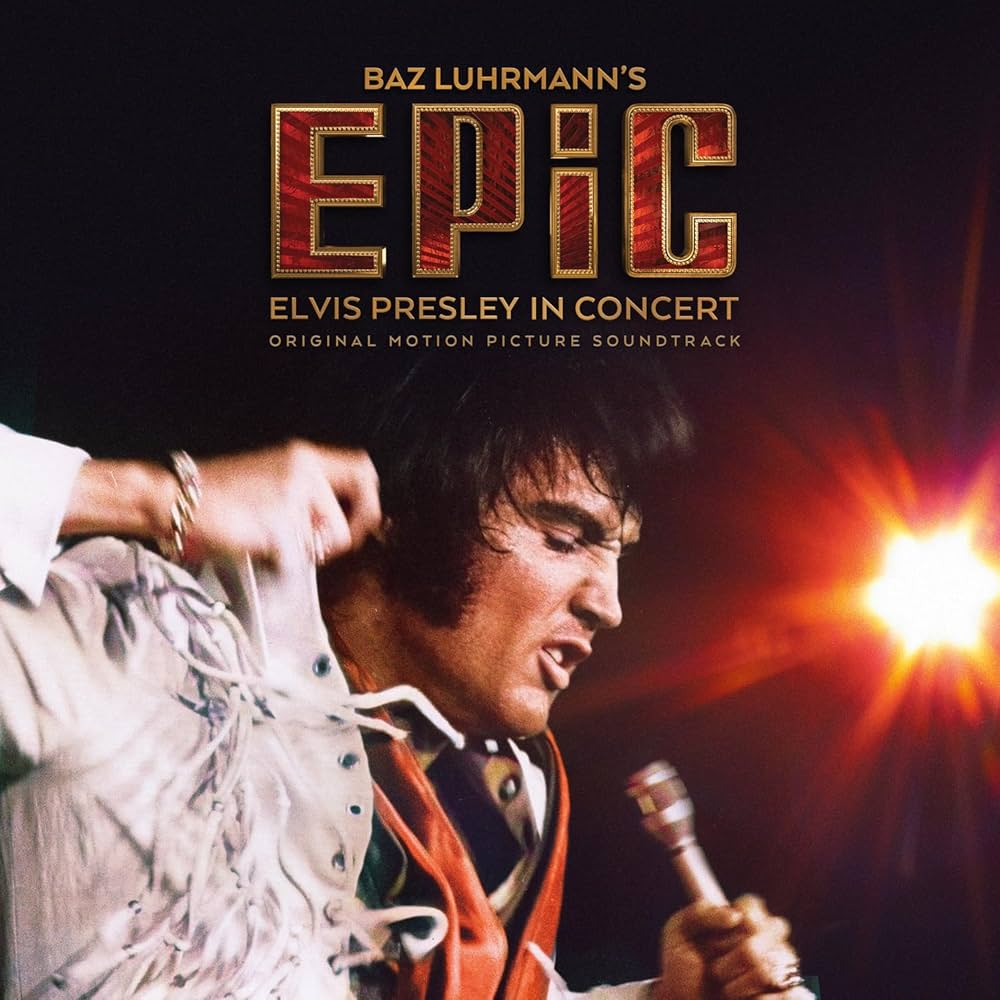
That familiarity changed everything. I was not just watching the film; I was listening with intent. It held my full attention.
The documentary, created by Baz Luhrmann, draws from newly uncovered footage of Elvis Presley’s Las Vegas residencies in the 1970s. It incorporates restored material from That’s the Way It Is (1970) and Elvis on Tour (1972), offering a deeper look at a defining period in his career.
At its core, EPiC presents Elvis as he was meant to be seen: a commanding live performer, telling his story through music and presence. The soundtrack captures that energy perfectly.
It has been on repeat for me ever since.
For this editing session, it became the natural choice.
The opening moments—Elvis singing “Can’t Help Falling in Love,” followed by the line, “There’s been a lot written and a lot said, but never from my side of the story”—set the tone. From there, “Also Sprach Zarathustra” builds into “American Trilogy” with a seamless, almost cinematic flow. It is a powerful sequence, one that resonates whether heard live or through speakers.
As I worked through my images, the music created the right balance—focused, but relaxed. The visuals from the film lingered in my mind, blending with the rhythm of the editing process.
The soundtrack is quickly becoming one of my personal favorites—possibly even earning a spot on that elusive “desert island” list.
Nearly five decades after his passing on August 19, 1977, Elvis’s impact remains undeniable. Ask anyone who lived through that era, and they will tell you how he captivated audiences. Others may not have been fans—but they still remember.
That kind of presence does not fade.
It is why I chose EPiC for this session. It fit the moment, the mood, and the work.
Even now, it is hard not to wonder how different things might have been had that day in August 1977 never come. Yet forty-nine years later, the music still resonates, the legacy still grows, and the connection to listeners remains as strong as ever.
There will never be another.


Discussion